What is inbound sales? The complete B2B guide [2026]
 21 minutes
 27.04.2026
![What is inbound sales? The complete B2B guide [2026]](https://www.dashly.io/blog/wp-content/uploads/2025/03/7-caring-inbound-sales-strategies-to-elevate-your-revenue-in-2025-6-1-1440x810.jpg)
You’re getting inbound leads. The traffic is there. And yet, the pipeline doesn’t move.
Most of the time, the problem isn’t lead volume. It’s what happens after the lead arrives. No clear qualification criteria. First response comes hours later. The booking link gets sent in a follow-up email the buyer never opens.
According to a study by RevenueHero across 1,000+ companies, over 63% of businesses didn’t respond to inbound leads at all. The average response time was 29 hours.
That’s not an inbound sales problem. Rather a process problem.
This guide covers what inbound sales actually is, how it differs from outbound, the four-stage process that converts interest into meetings, and the tactics and tools that make it repeatable at scale.
What is inbound sales?
Inbound sales is the process of converting leads who already found you into paying customers. The buyer initiates contact, usually through a form, a chat, a trial signup, or a demo request. Your job is to respond fast, qualify accurately, and move them to the next step before the interest fades.
That’s the inbound sales definition in one sentence. Now here’s what it means in practice.
A lead who fills out your pricing page form at 2pm is in a different mental state than someone who received a cold email that same morning.
They already know they have a problem. They’ve done research. They landed on your site because something matched. Inbound sales picks up from that moment and either converts it into pipeline, or lets it go cold while the buyer moves on to a competitor.
The common failure point is the gap between when inbound leads arrive and when an actual conversation starts.
Inbound sales vs. inbound marketing: the boundary
They’re related but they don’t overlap. Inbound marketing creates the conditions for leads to arrive: content, SEO, ads, webinars. Inbound sales takes over the moment someone raises their hand. Marketing owns the traffic. Sales owns the conversation.
In B2B SaaS, that boundary matters because both teams often blame each other when pipeline is weak. Marketing says the leads aren’t converting. Sales says the leads aren’t qualified. Usually, the breakdown is at the handoff: the lead arrives and nothing happens fast enough.
What an inbound sales representative actually does
An inbound sales representative doesn’t prospect. They respond. Their job is to engage leads who already showed intent, figure out if there’s a real fit, and either move the conversation forward or disqualify cleanly.
The skills look different from outbound. Cold calling stamina doesn’t matter much here. What matters is speed of response, ability to ask the right qualifying questions without making it feel like an interrogation, and knowing when to hand off to a senior rep vs. when to close the loop yourself.
A strong inbound sales rep treats every inbound lead as someone who interrupted their day to raise their hand. The response has to match that.
Inbound sales vs outbound sales: Key differences
The core difference is who starts the conversation. In inbound sales, the buyer reaches out first. In outbound sales, your team does. Everything else flows from that.
| Inbound sales | Outbound sales | |
|---|---|---|
| Who initiates contact | The buyer finds you and raises their hand | Your team identifies and contacts the buyer |
| Lead intent level | High. The lead is already researching a solution | Low to medium. You’re creating awareness from scratch |
| Speed to conversion | Faster, when the first response is quick and relevant | Slower. Multiple touches needed before a meeting happens |
| Cost profile | Upfront investment in content and SEO, then cost per lead decreases over time | Ongoing cost per contact: tools, data, SDR time |
| Skills required | Response speed, qualification accuracy, active listening | Prospecting, objection handling, high-volume outreach |
Neither motion is universally better. The question is fit.
Inbound sales works when you have traffic and brand awareness, but need a faster, more consistent way to convert that interest into meetings. The bottleneck is usually the gap between lead arrival and first contact.
Outbound sales works when you’re targeting a narrow ICP, entering a new market, or selling a product with low organic search volume. You can’t wait for leads to arrive if nobody’s looking for what you offer yet.
Most B2B SaaS teams run both, but treat them the same way. Same messaging, same SLAs, same qualification criteria. That’s where pipeline leaks. Inbound leads and outbound leads need different playbooks: different response times, first-touch scripts, and handoff rules.
Inbound leads contacted within 5 minutes are up to 100x more likely to be qualified than those reached after 30 minutes, according to a Lead Response Management study by XANT. Outbound leads don’t have that same decay curve because you’re setting the pace.
4 stages of the inbound sales process
The inbound sales process breaks down into four stages: Identify, Connect, Explore, Advise. This framework comes from HubSpot’s inbound sales methodology, and it’s widely used because it maps to how buyers actually move, not how sellers want them to move.
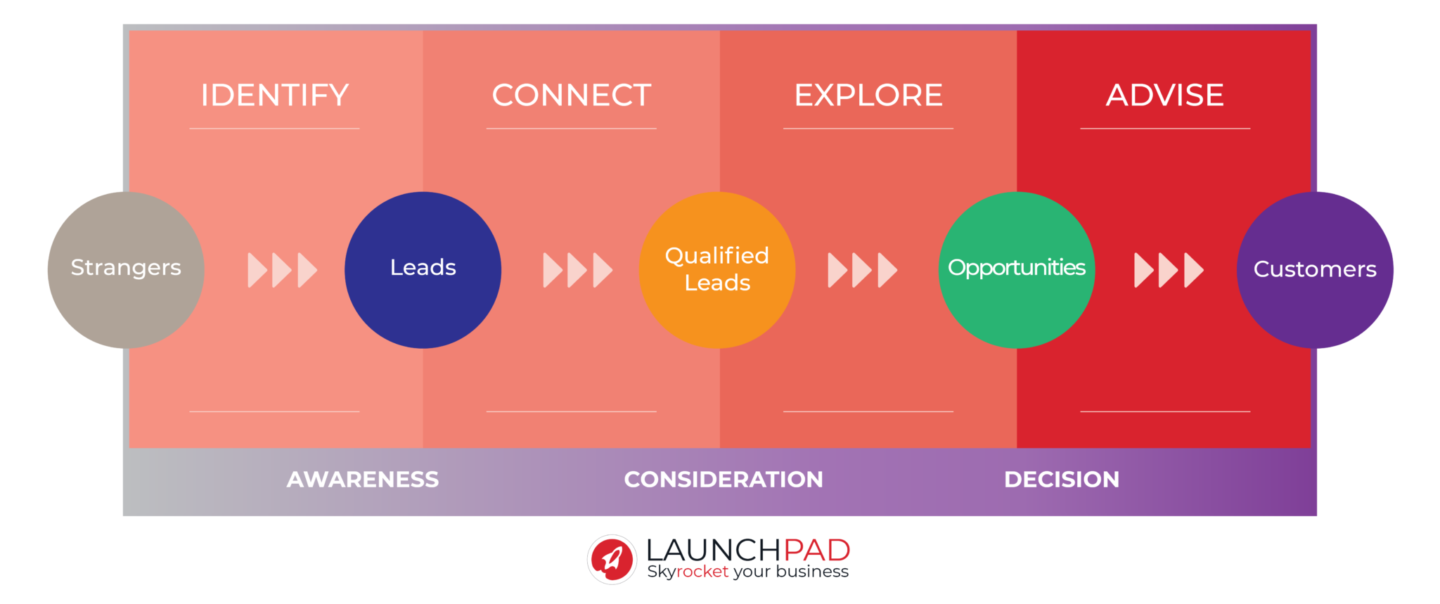
Each stage has a specific job. Skipping one or rushing through it is usually where deals stall.
1. Identify: find leads who are actively buying
Not every inbound lead is ready to buy. Some are researching. Some are comparing options they’ll never act on. Some downloaded a guide for a presentation and have zero intent to purchase.
The Identify stage is about separating active buyers from passive ones before you spend time on them.
In practice, this means defining what “active buying” looks like for your product. Pricing page visits, repeated logins during a trial, a demo request from a company size that matches your ICP — these are buying signals. Someone who read a blog post once is not.
Most teams skip this step and treat all inbound leads the same. The result is SDRs spending half their week on leads that were never going to convert.
2. Connect: first contact with context
The Connect stage is the first real conversation. How you open it determines whether the lead stays engaged or goes quiet.
Generic openers kill this stage. “Hi, I saw you visited our site” tells the lead nothing and gives them no reason to respond. A good Connect message references something specific: the page they visited, the feature they asked about, the company size or industry that makes them a relevant fit.
Speed matters here more than anywhere else in the inbound sales funnel.
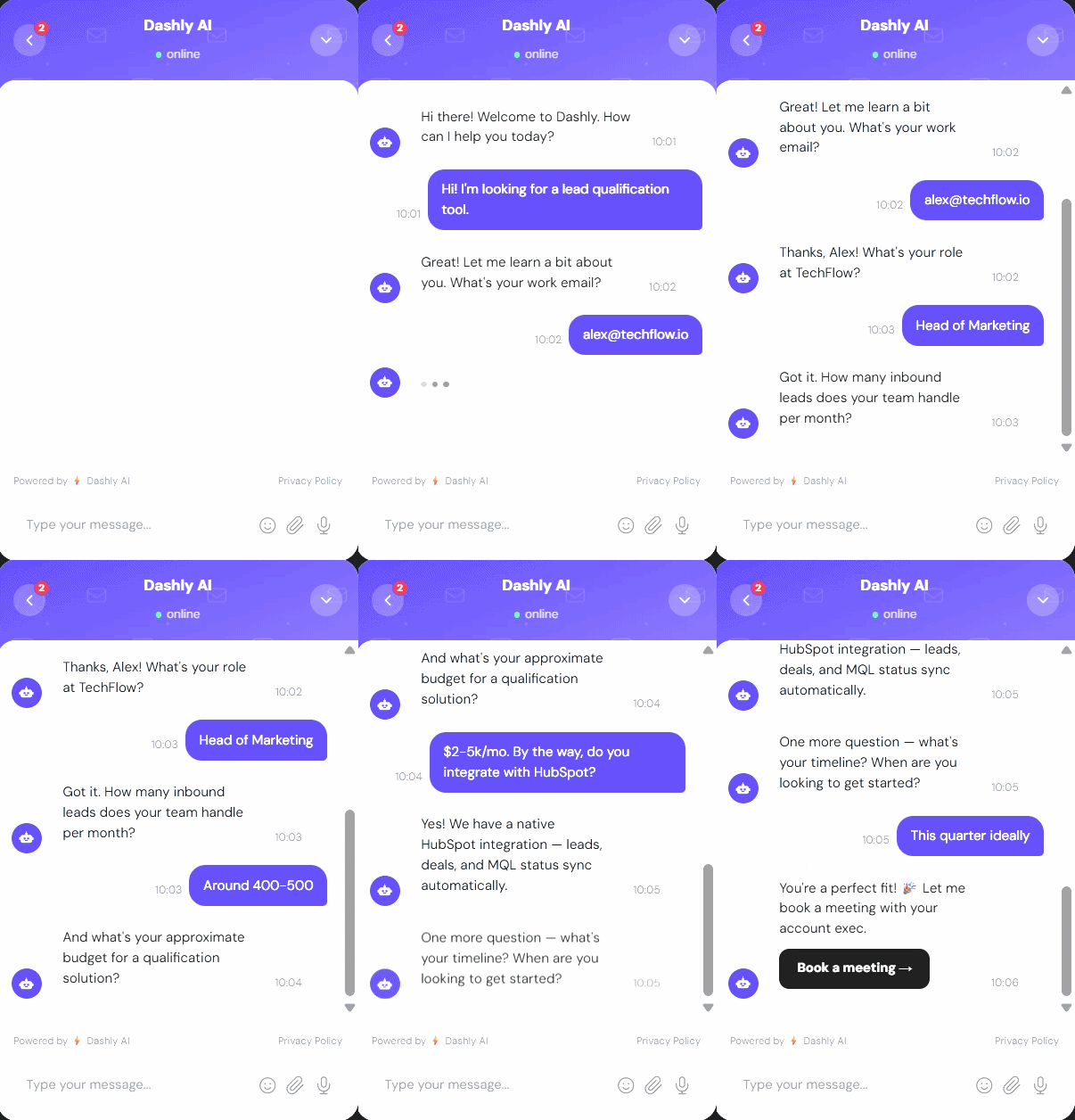
Dashly’s AI Qualifier handles this stage automatically: it picks up the conversation the moment a lead engages on the site, uses behavioral data and CRM context to personalize the opening, and responds in seconds rather than hours. Reps get involved only after the first qualification data is already captured.
Explore: qualify and understand the problem
Explore is the discovery stage. Your goal is to understand whether the lead has a real problem you can solve, the budget and authority to act on it, and a timeline that makes the deal worth pursuing.
The failure mode here is interrogation. Firing five qualification questions in sequence makes the conversation feel like a form, not a conversation. Good inbound sales techniques at this stage look more like a structured conversation: one question at a time, listening to the answer before asking the next one, and using what you already know about the lead to skip questions you don’t need to ask.
If the lead asked about a specific integration during the Connect stage, you don’t open Explore by asking “what are you trying to solve?” You start from where they left off.
4. Advise: make a personalized recommendation
Advise is where most sales conversations either close or collapse. The lead has shared their situation. Now they need a recommendation, not a product tour.
A strong Advise stage ties your product directly to the specific problem the lead described in Explore. “Based on what you told me about your current qualification process, here’s how this would work for your team” lands differently than a generic demo.
This stage also requires knowing when to stop. If the fit isn’t there, saying so builds more trust than pushing a deal that won’t work. The leads you disqualify here are the ones that would have churned in three months anyway.
The four stages only work when the handoffs between them are clean. Identify feeds Connect with context. Connect feeds Explore with the opening question. Explore feeds Advise with the specific problem to solve. If any stage produces no output, the next one starts from scratch and the deal usually dies.
Learn more about inbound lead generation:
![What is inbound lead generation? The complete B2B guide [2026]](https://www.dashly.io/blog/wp-content/uploads/2026/04/inbound-lead-generation-cover-720x317.png)
Inbound sales strategy: How to build one for B2B SaaS
A B2B inbound sales strategy is a system that runs the same way whether your team is at full capacity or one rep is out sick. The goal is predictable pipeline from inbound, not occasional wins when everything lines up.
Here’s how to build it 👇
Define your ICP and buying signals
Start with who you’re actually trying to convert. Not a persona document with a stock photo and a job title. A working definition that tells your team, in plain language, which leads to prioritize and which to deprioritize.
A useful ICP for inbound sales answers four questions:
- What does the company look like? Industry, headcount, tech stack, revenue range.
- What does the contact look like? Role, seniority, what they’re responsible for.
- What problem are they trying to solve? The specific job-to-be-done that makes your product relevant right now, not in six months.
- What does buying behavior look like? Which pages they visit, what questions they ask, how quickly they move.
Once you have that, define your buying signals explicitly. A pricing page visit from a VP of Sales at a 50-person SaaS company is a buying signal. The same visit from a student doing research is not. Your team shouldn’t have to make that judgment call on the fly, every time.
Align sales with the inbound funnel
Most inbound sales problems come from a broken handoff process.
Marketing generates a lead. It lands in a CRM. A notification goes out. Someone picks it up four hours later with no context about where the lead came from, what they looked at, or what they asked. The first call opens with “so, tell me about your business” and the lead, who already did 40 minutes of research on your site, has to start from scratch.
Fix the handoff before you fix anything else.
Every inbound lead that reaches a rep should come with: source, pages visited, any chat or form content, and a rough intent score. Sales shouldn’t be discovering the lead’s context. They should be continuing a conversation that already started.
Build the inbound sales funnel
The inbound sales funnel has four checkpoints. Each one needs a defined owner, a response time SLA, and a qualification criteria to pass the lead to the next stage.
- Traffic to lead: someone visits your site and takes an action (form, chat, trial, demo request)
- Lead to MQL: the lead matches your ICP and shows buying intent
- MQL to meeting: a qualified conversation happens and a meeting gets booked
- Meeting to opportunity: the meeting produces a real deal worth pursuing
Most teams measure only the first and last checkpoints. The middle two are where inbound leads go quiet, and without measurement, you can’t fix what you can’t see.
Speed-to-lead as a conversion lever
This is the highest-impact operational change most teams can make, and the most consistently ignored one.
Responding within 5 minutes increases qualification likelihood by up to 100x compared to a 30-minute delay, according to XANT’s Lead Response Management study. The curve drops sharply in the first hour and flattens out after that.
For most B2B SaaS teams, hitting a 5-minute response window during business hours is hard. Hitting it outside business hours, on weekends, or across time zones is nearly impossible without automation.
This is where Dashly closes the gap. The AI Qualifier engages the lead the moment they convert on the site, responds in seconds using behavioral data and CRM context, and collects qualification data before a rep gets involved. By the time a human picks up the conversation, the lead is already warm and the first questions are already answered.
Check out how AI agent qualifies a lead and books a meeting wit them:
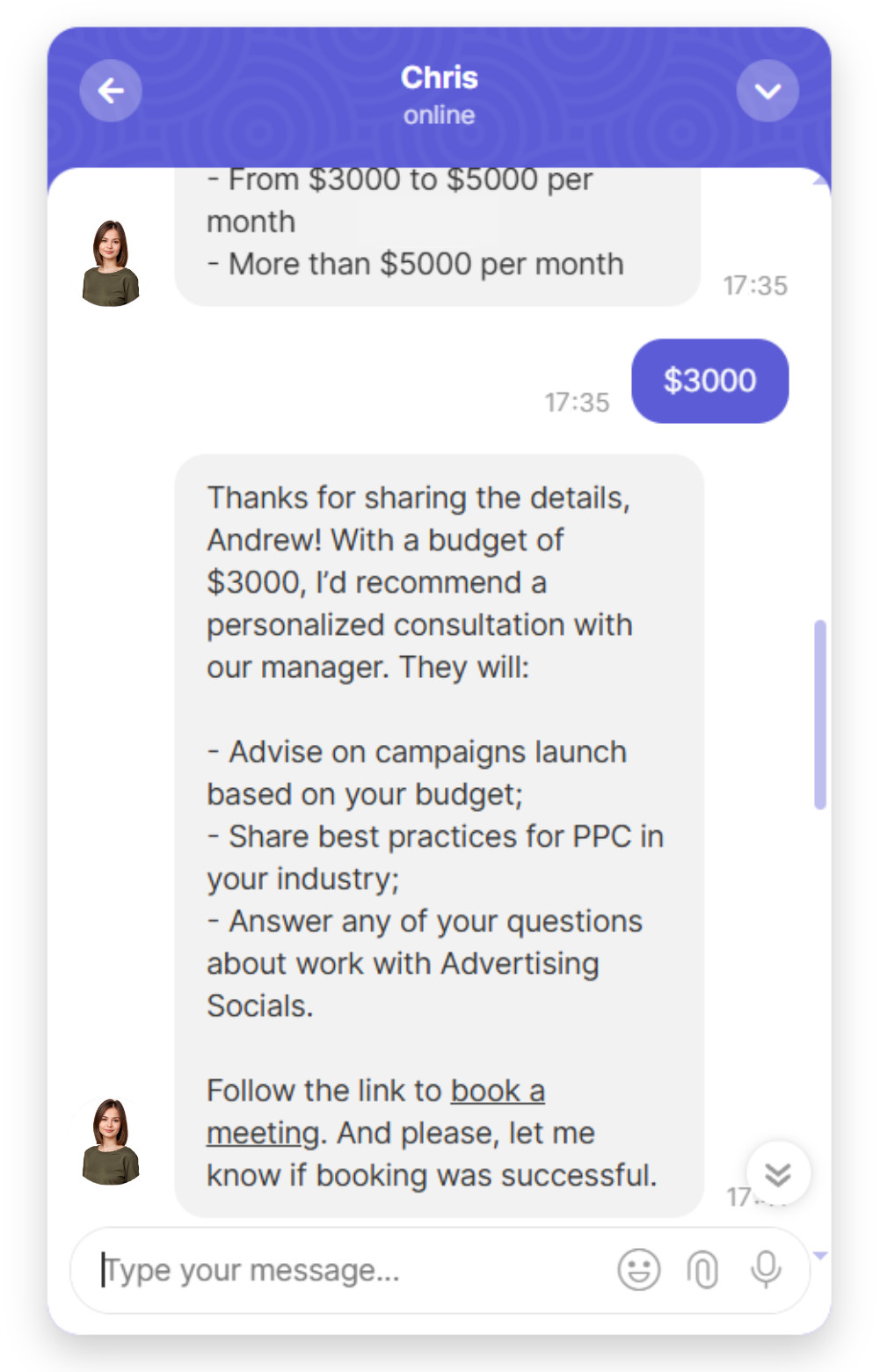
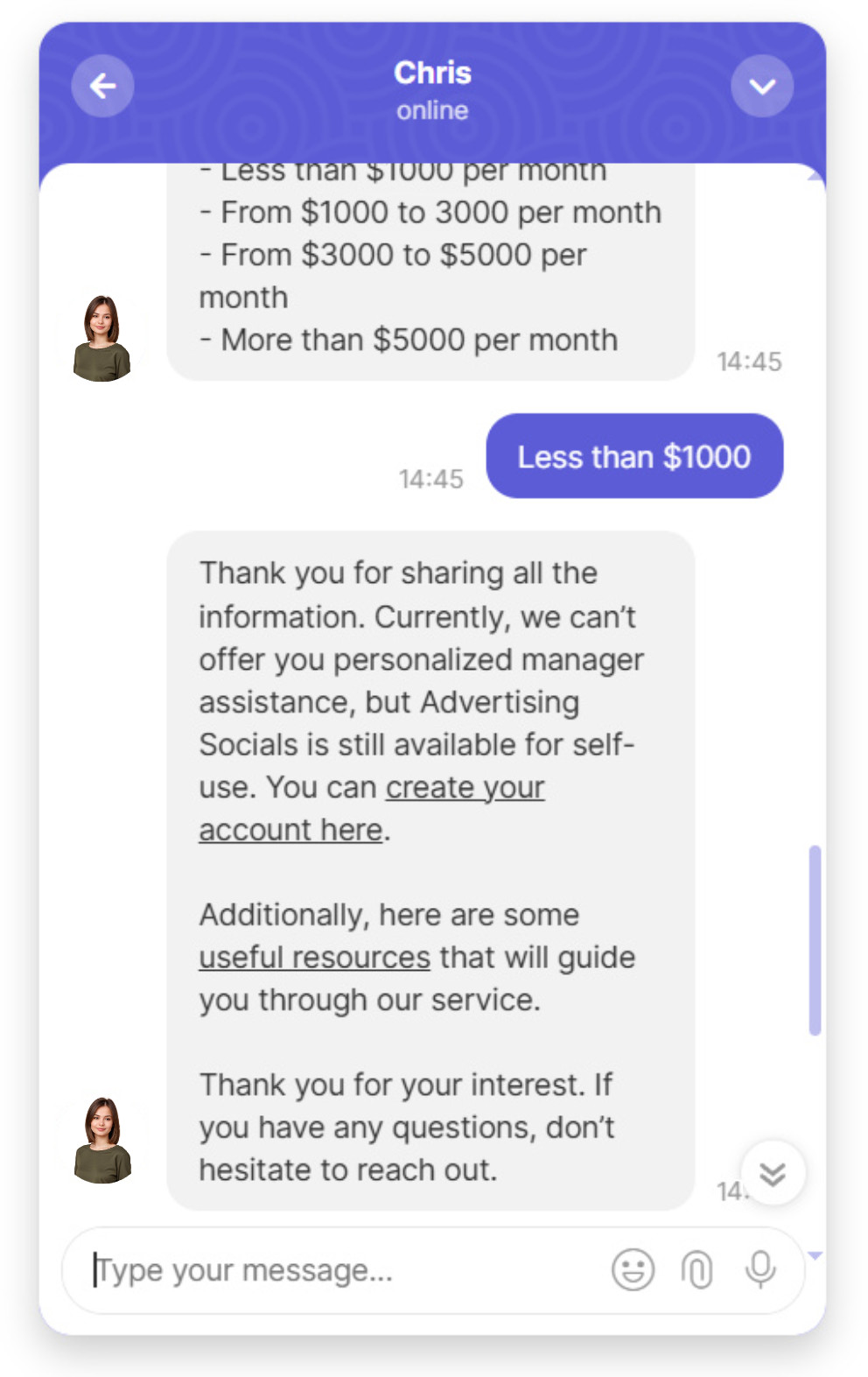
In one MarTech SaaS case, that translated to 82% of conversations converting to a booked meeting and a 653% ROMI.
Speed-to-lead is a crucial metric to track and work on. It makes the difference between a pipeline that fills itself and one that relies on reps catching leads before they go cold. The faster the first response, the less work every subsequent stage requires.
Inbound sales techniques that move pipeline
Most inbound sales techniques fail not because they’re wrong in theory, but because they’re applied generically.
The same script to every lead, the same follow-up sequence regardless of intent, the same discovery questions whether the lead asked about pricing or downloaded a whitepaper three weeks ago.
What works in inbound selling is context-first execution:
1. Prioritize by intent signals, not by arrival order
Not all inbound leads deserve the same response time.
A lead who visited the pricing page twice, opened your last two emails, and just requested a demo is not the same as someone who filled out a contact form after reading a blog post.
Build a simple scoring system based on behavior: pages visited, time on site, actions taken, engagement history. Then set response SLAs by tier. High-intent leads get a response in minutes. Lower-intent leads go into a nurture sequence and get picked up when they show stronger signals.
Without this, reps spend equal time on unequal opportunities and the best leads go cold while the team is busy with ones that were never going to convert.
2. Personalize the first touch with what you already know
By the time a lead submits a form or starts a chat, you already have information about them:
- the page they converted on,
- the content they consumed,
- the company domain in their email. Use it.
“Hi, saw you checked out our integration page for Salesforce” opens differently than “Hi, thanks for reaching out.”
Personalization at this stage doesn’t require deep research. It requires using the data you already have before reaching out.

3. Run discovery calls around the buyer’s job-to-be-done
The goal of a discovery call in inbound sales is to understand the specific situation well enough to know whether your product solves their actual problem, and if so, how.
- Structure the call around what they’re trying to accomplish, not what your product can do.
- Ask what’s driving the timing. Ask what they’ve tried before.
- Ask what a good outcome looks like in three months.
The answers tell you how to frame the Advise stage, and whether it’s worth getting there at all.
Reps who open discovery by walking through a product deck are skipping this stage entirely. The lead already knows what the product does. They need to know if it works for their situation.
4. Use social selling for warm follow-up, not cold outreach
LinkedIn works differently in inbound sales than in outbound. You’re not cold prospecting. You’re following up on a conversation that already started somewhere else.
If a lead went quiet after a demo, a short LinkedIn message referencing the specific topic you discussed is a lighter touch than another email in a sequence. It’s a different channel, lower friction, and harder to ignore than the seventh email in the same thread.
This only works when the message is specific. “Wanted to follow up on our call” is not social selling. “Saw your comment about X, thought it was relevant to what you mentioned about Y” is.
5. Remove friction from the booking step
The booking step is where a surprising number of inbound sales processes break. The rep qualifies the lead, the conversation goes well, and then the next step is “I’ll send you a calendar link.” The email arrives hours later. The lead doesn’t open it until the next morning. By the time they do, the urgency is gone.
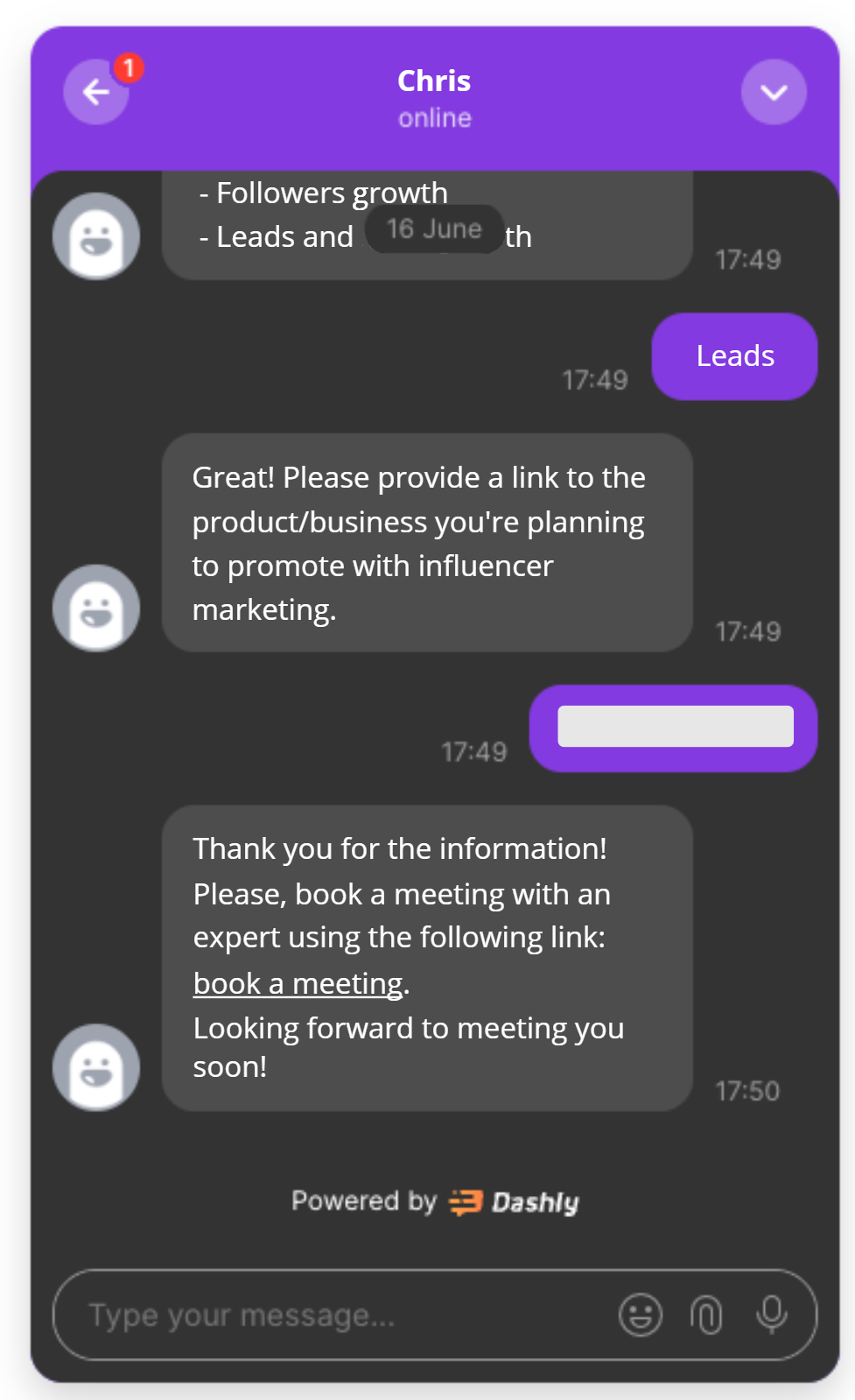
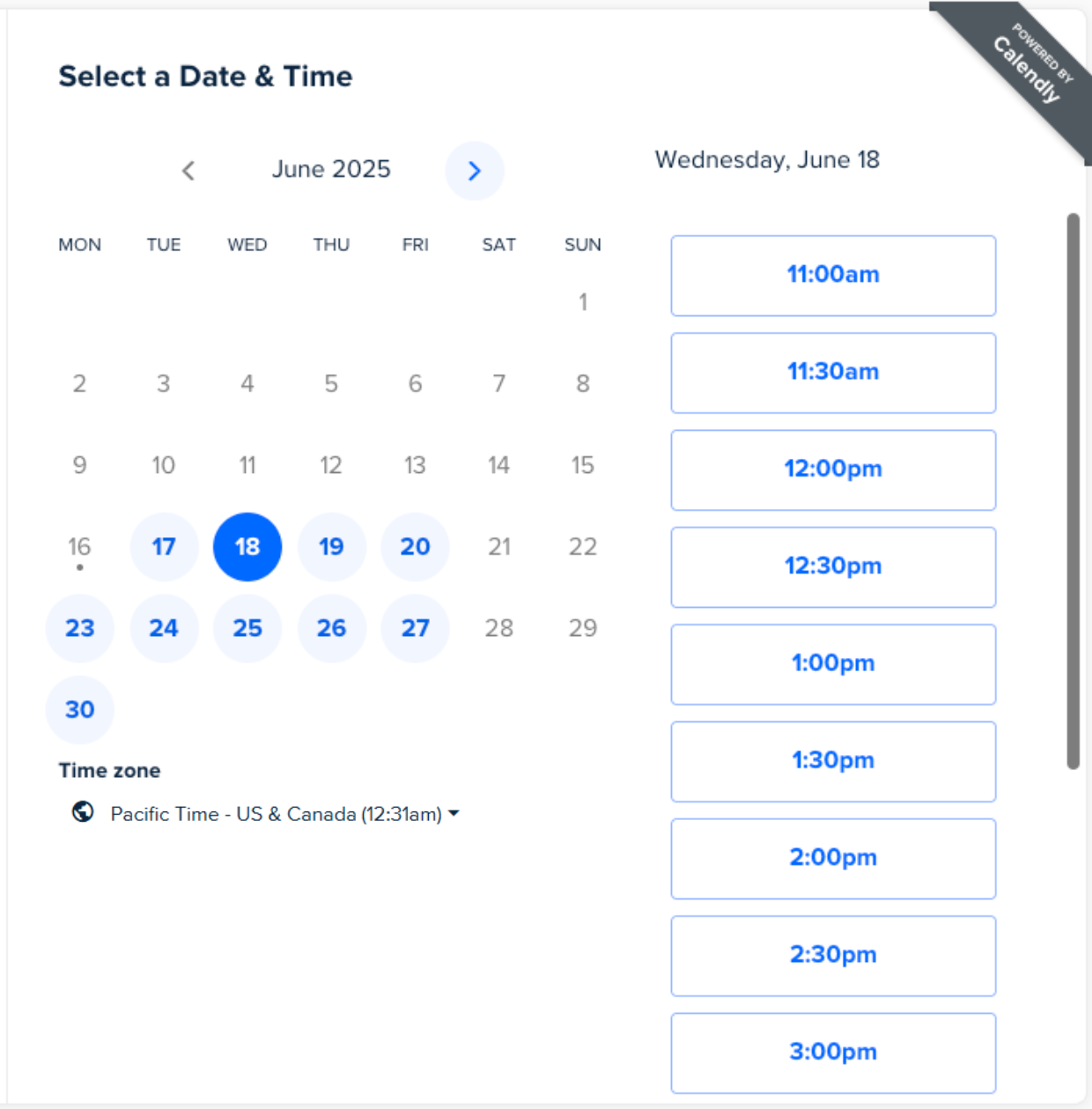
Book the meeting in the same conversation where qualification happened. If the rep is on a call, open the calendar and offer two times directly. If the conversation happened in chat, the booking link should appear the moment the lead is qualified, not in a follow-up email.
The fastest way to lose a qualified lead is to add a step between “yes, I’m interested” and the meeting being on the calendar. Every extra step is a chance for the lead to reconsider, get distracted, or book with a competitor who moved faster.
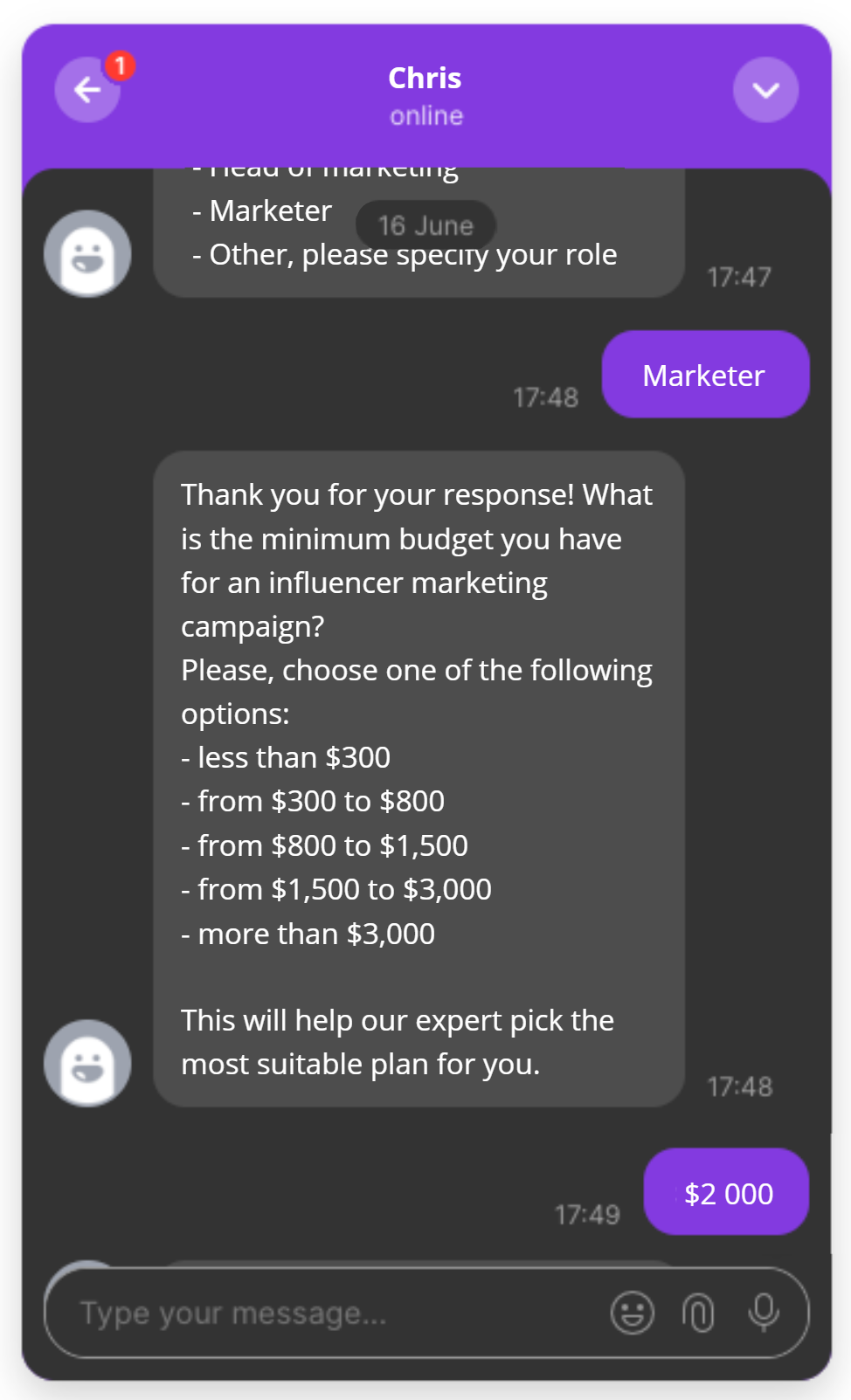
Here’s an alternative. Set up and AI Qualifier agent that will offer to book meeting if a lead is MQL:
Inbound sales representative: Role, skills & responsibilities
An inbound sales representative works exclusively with leads who already showed interest in your product. No cold lists, no prospecting sequences. Their job starts the moment someone raises their hand and ends when that lead either converts to an opportunity or gets disqualified.
The role sounds simpler than outbound. In practice, it requires a different set of skills that most hiring processes don’t screen for.
What an inbound sales rep actually does
The day-to-day of an inbound sales rep breaks into three types of work:
- Response and qualification. Picking up new leads quickly, running the Identify and Connect stages, and deciding within the first conversation whether the lead is worth a full discovery call.
- Discovery and advising. Running structured calls to understand the lead’s situation, matching it to a specific use case, and making a recommendation that’s grounded in what the lead actually said.
- Pipeline hygiene. Keeping CRM records accurate, logging call notes that the next person in the process can actually use, and flagging leads that went quiet so they can be re-engaged or closed out.
A lot of that third category gets skipped when teams are busy. It’s also the one that breaks the inbound sales funnel when it’s missing, because context stops transferring between stages.
Skills that matter for inbound specifically
Outbound sales rep skills and inbound sales rep skills overlap, but they’re not the same job.
Outbound rewards persistence. You’re calling people who didn’t ask to hear from you, handling objections before the product is even understood, and working through high rejection rates to find the few leads worth pursuing. Volume and resilience matter.
Inbound rewards precision. The lead already has some interest. The question is whether it’s real, whether the fit is there, and whether your rep can move the conversation forward without losing the lead’s attention. The skills that matter most:
- Speed of response. Not just being available, but picking up a new lead within minutes and opening with something relevant, not generic.
- Qualification accuracy. Knowing which questions surface real buying intent versus polite curiosity, and being able to make a disqualification decision without wasting the lead’s time or the team’s.
- Active listening. Inbound leads often tell you exactly what they need in the first few minutes. Reps who follow a script miss it. Reps who listen and adapt don’t.
- CRM discipline. Every interaction needs to be logged with enough context that the next rep, or the account executive closing the deal, can pick up without starting over.
How the inbound sales rep role differs from an outbound SDR
The clearest difference is in who controls the pace. An outbound SDR sets the tempo. They decide when to reach out, how often, and through which channels. An inbound sales representative responds to the buyer’s tempo. The lead decides when to engage, and the rep’s job is to be ready when that happens and move things forward from there.
This makes inbound a better fit for reps who are good at reading conversations and adjusting in real time, and a harder fit for reps who rely on structured sequences and volume to hit their numbers.
Inbound sales tools
You don’t need a large stack to run inbound sales well. You need the right tools covering four jobs: store and track lead data, qualify and route leads fast, book meetings without friction, and record what happened in conversations.
HubSpot Sales Hub (CRM and pipeline management)
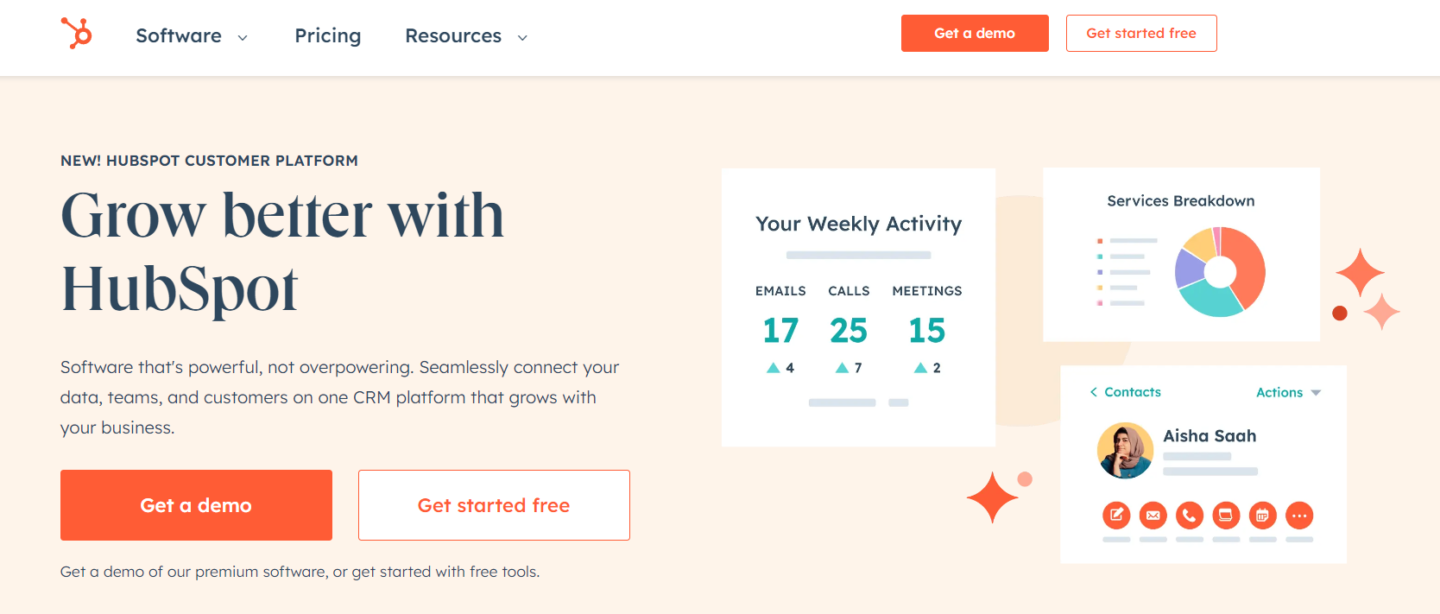
For B2B inbound sales teams, HubSpot is the most common starting point. Every interaction with a lead gets logged: pages visited, emails opened, forms filled, calls made. When a rep picks up a new lead, the context is already there in the contact record, not sitting in someone’s inbox.
The pipeline view shows where every deal sits, and the built-in lead scoring lets you prioritize based on behavior rather than gut feel. It integrates with most tools in this list, which matters when you’re trying to move data between a form, a CRM, and a calendar without building custom connectors.
Good fit when you want marketing and sales working from a single source of truth, without stitching together five separate tools.
Dashly (AI qualification and instant booking)
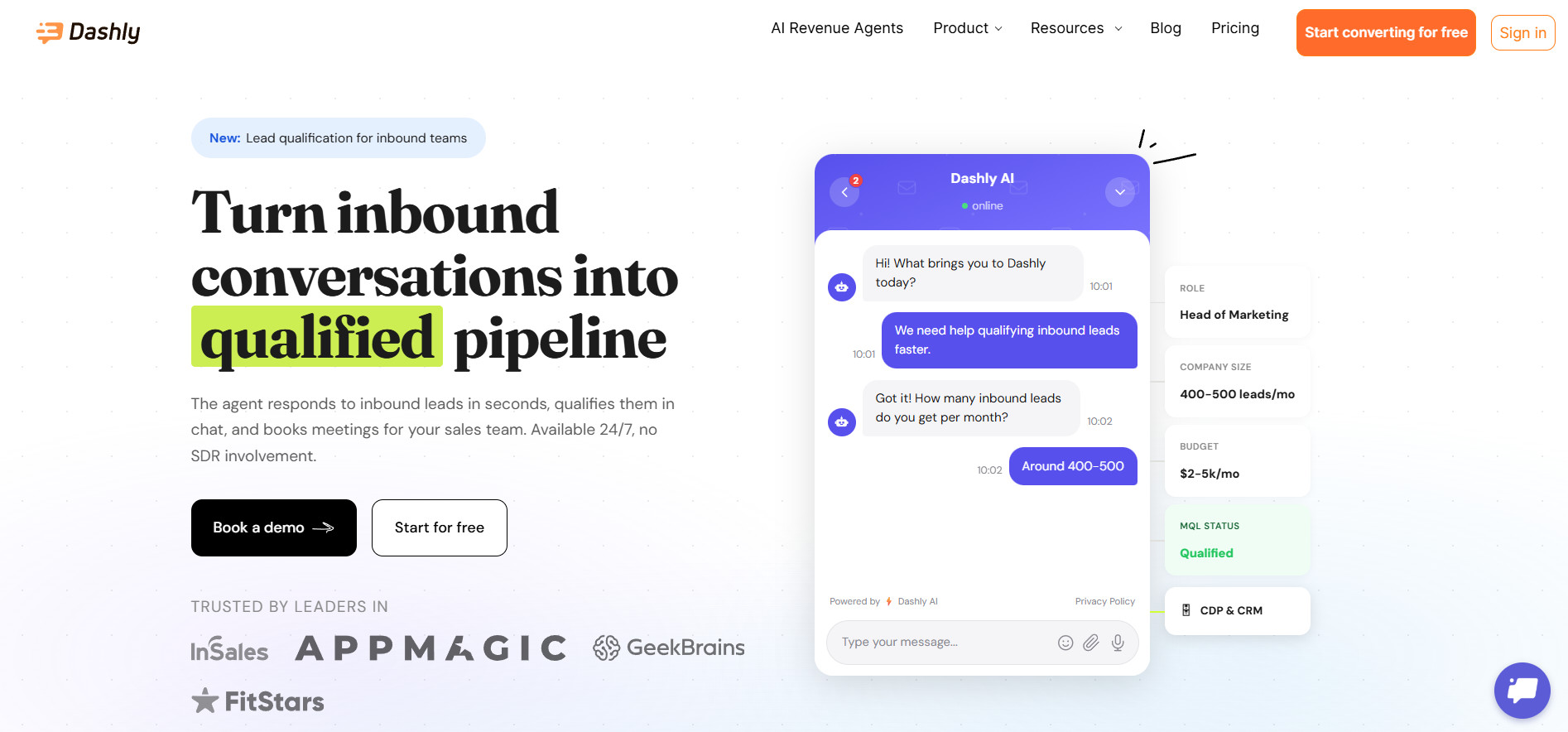
Dashly sits at the Connect and Explore stages of the inbound sales process: the moment a lead engages on the site and the first conversation that determines whether they’re worth a rep’s time.
The AI Qualifier picks up the conversation immediately, uses behavioral data and CRM context to ask relevant questions, and avoids asking for information it already has. Once a lead is qualified, the AI Booking Agent offers available slots and books the meeting in the same chat, before the lead leaves the page.
The difference from a standard chatbot: decisions are based on CDP data (visit history, prior conversations, CRM fields), not keyword matching. In one MarTech SaaS team, that translated to 82% of conversations converting to a booked meeting and a 653% ROMI.
Good fit when you have inbound traffic but speed-to-lead and qualification consistency are the bottleneck.
Gong (conversation intelligence)
Gong records and analyzes sales calls. After each conversation, it surfaces what topics came up, how long each side talked, which objections appeared, and how the call compared to deals that closed. Managers use it for coaching. Reps use it to review calls without relying on memory or manual notes.
For inbound sales specifically, Gong helps identify which discovery questions actually move deals forward and which parts of the Advise stage cause leads to go quiet. That feedback loop is what separates teams that improve their conversion rates over time from ones that repeat the same patterns.
Good fit when you have enough call volume to spot patterns and a manager who will actually use the coaching data.
Calendly (individual scheduling)
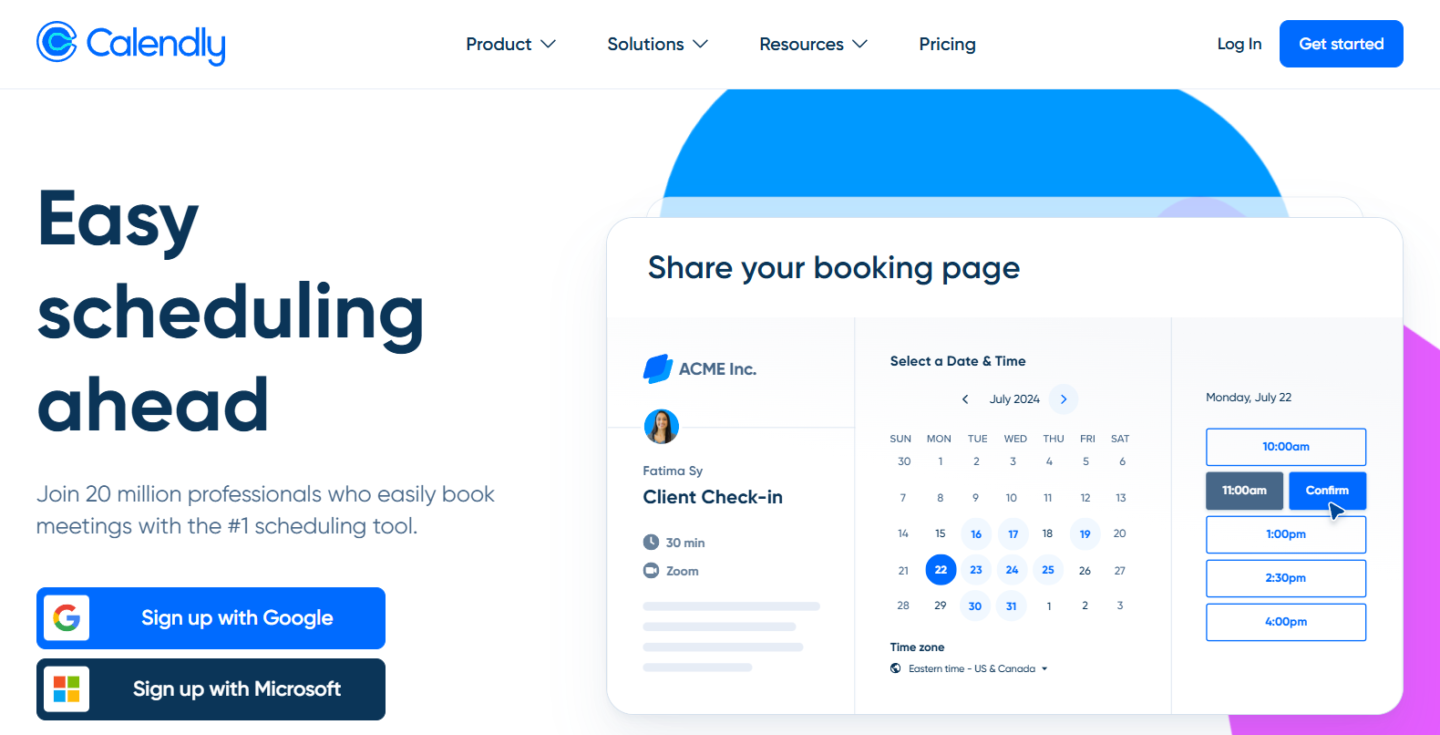
For teams that don’t need complex routing logic, Calendly handles the basics well: a rep shares their link, the lead picks a time, the meeting lands on both calendars with a video conferencing link attached. It integrates with HubSpot, Salesforce, and most CRMs to log the booking automatically.
Where Calendly falls short in an inbound sales context is routing. It can assign meetings round-robin or by ownership, but it can’t qualify a lead and route them to different reps based on deal size, industry, or product interest the way Chili Piper can. For smaller teams with simpler processes, that’s rarely a problem.
Good fit for individual reps or small teams where routing logic isn’t complex and ease of setup matters more than automation depth.
The tool category that makes the biggest difference for most inbound teams isn’t the CRM. It’s whatever sits between the lead’s first action and the first real conversation. That gap is where the most pipeline gets lost, and it’s the one most stacks leave unaddressed.
Wrapping up
Inbound sales works when the system behind it does. Getting traffic isn’t the hard part. Converting it consistently is where most teams fall short.
The four-stage inbound sales process (Identify, Connect, Explore, Advise) gives you a framework. Your ICP definition, buying signal criteria, and speed-to-lead SLAs are what make it actionable. Without those, the framework stays theoretical.
If your inbound sales funnel is leaking between lead arrival and first meeting, the fix is usually not more traffic. It’s tightening the handoff, qualifying faster, and removing the friction between a lead saying yes and a meeting landing on the calendar.
That’s exactly what Dashly is built for. The AI Qualifier and AI Booking Agent handle the Connect and Explore stages automatically. So your reps spend time on qualified conversations, not on chasing leads who went cold waiting for a response.