Inbound marketing funnel: Stages, strategy & how to build one [2026]
 25 minutes
 06.05.2026
![Inbound marketing funnel: Stages, strategy & how to build one [2026]](https://www.dashly.io/blog/wp-content/uploads/2025/03/building-your-inbound-marketing-funnel-a-caring-step-by-step-guide-3-1440x810.jpg)
Most companies with a traffic problem don’t actually have a traffic problem. They have a funnel problem.
Leads land on the site, read a blog post, maybe fill out a form. Then nothing. Or something happens, but 18 hours later. By the time a sales rep follows up, the prospect has already booked a demo with three competitors and moved on.
The inbound marketing funnel is the framework that fixes this. Not the traffic part — the conversion part.
An inbound marketing funnel is a structured process that attracts strangers through content, converts them into leads, and guides them toward a purchase decision using value-driven interactions rather than interruptive tactics. Each stage has a specific job. When they’re connected properly, leads flow from first search to signed contract without falling through the gaps.
In this guide, you’ll learn:
- What the inbound marketing funnel is and how it differs from a sales funnel
- The 4 stages and what to focus on at each one
- Which content format works at TOFU, MOFU, and BOFU
- A six-step process for building your own funnel from scratch
- The key metrics to track at each stage
- How AI agents are changing what’s possible in 2026
- The most common funnel mistakes and concrete fixes
What is an inbound marketing funnel?
An inbound marketing funnel is a model that maps how a stranger becomes a customer through content, engagement, and trust. Unlike outbound tactics (cold calls, display ads, purchased lists), inbound pulls people in by giving them something useful first.
The key distinction worth pinning down early: the inbound funnel governs how you attract and nurture demand. The sales funnel governs how you close it. The two overlap at the bottom, where a qualified lead moves from marketing’s hands into a sales conversation.
Inbound marketing funnel vs. sales funnel
| Inbound Marketing Funnel | Sales Funnel | |
|---|---|---|
| Focus | Attracting and nurturing leads through content | Moving qualified leads toward a purchase decision |
| Entry point | Strangers with no prior awareness of your brand | Qualified leads already engaged with your product |
| Primary channels | SEO, content marketing, social, email | Demos, sales calls, proposals, negotiations |
| Owner | Marketing team | Sales team |
| Timeline | Weeks to months (content compounds slowly) | Days to weeks (deal-specific velocity) |
Inbound vs. outbound
The outbound funnel pushes messages to people who didn’t ask for them. You interrupt them while they’re doing something else — scrolling, checking email, reading the news. Inbound inverts this. People come to you because you published something they were already searching for.
The practical difference in 2026: outbound gets more expensive every year. CPMs go up, attention spans go down, and cold email deliverability gets harder to maintain. Inbound compounds. A blog post or case study published today can generate pipeline three years from now. That asymmetry is why B2B SaaS companies consistently over-index on inbound over time.
Most growth teams don’t treat it as either/or. Outbound fills gaps and accelerates specific account pursuit. Inbound handles the scalable, compounding side of demand generation. For a deeper comparison, see our breakdown of inbound vs outbound leads.
The flywheel context
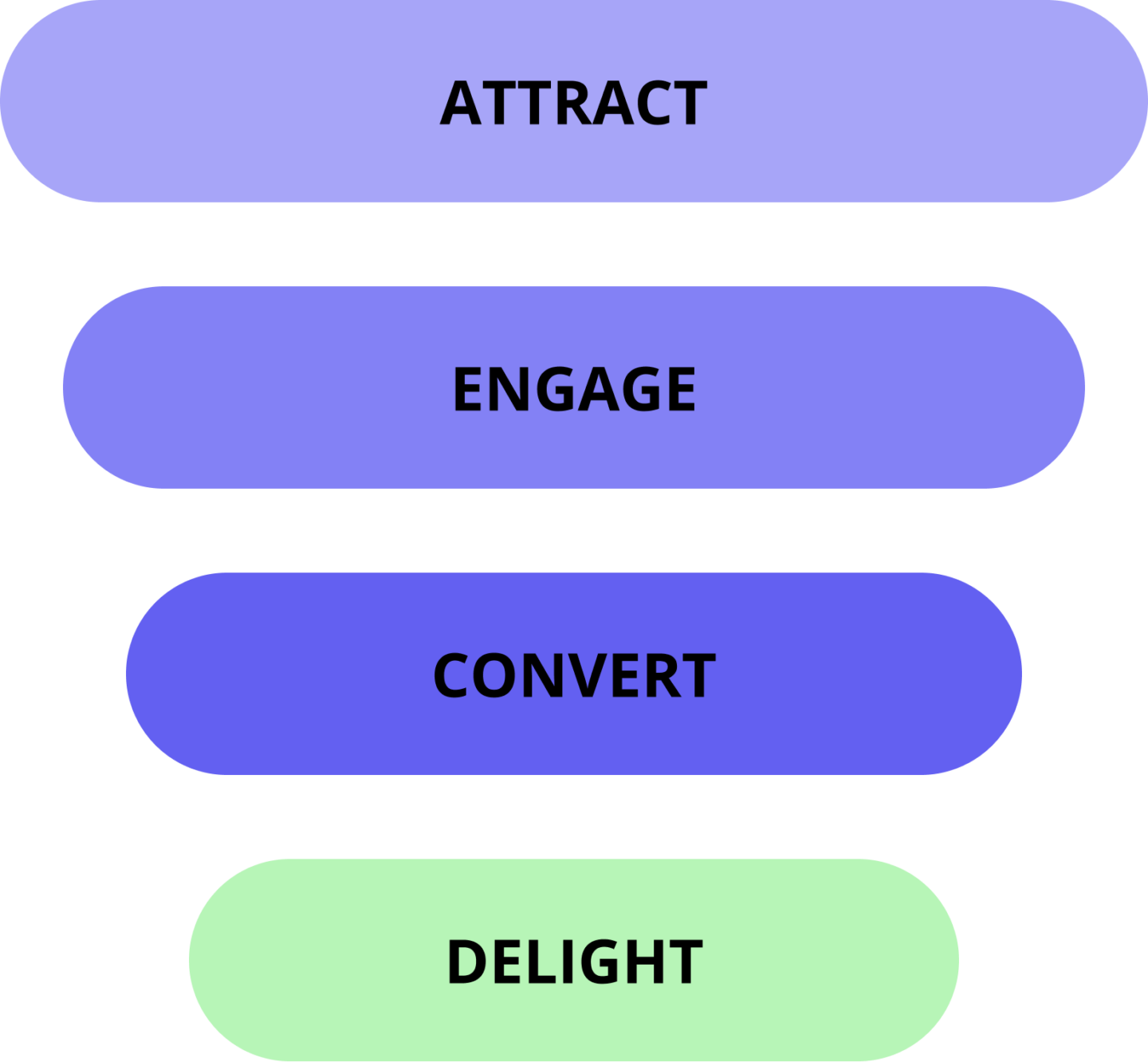
The traditional funnel has one flaw: it ends. Leads go in at the top, customers come out at the bottom, and the model ignores what happens next. The flywheel reframes this. Satisfied customers refer colleagues, leave reviews, and expand their contracts — generating new leads without additional spend. The inbound marketing funnel maps directly onto the flywheel: Attract, Engage, Convert, Delight. Delight feeds back into Attract. That’s where the compounding comes from.
The 4 stages of the inbound marketing funnel
Each stage represents a different level of buyer awareness and a different job for your team. The marketing funnel stages correspond to the buyer journey — Awareness, Consideration, Decision, and Retention — but with specific inbound tactics attached to each.
Stage 1 — Attract (Top of Funnel)
Goal: turn strangers into visitors.
At this stage, people don’t know who you are. They’re not looking for your product. They’re searching for answers to problems they already have. Your job is to show up where they’re searching with content that actually helps.
Top-of-funnel inbound marketing channels:
- Organic search — SEO-optimized blog posts, pillar pages, comparison content targeting problem-aware searches
- Short-form video — LinkedIn native video, YouTube Shorts explaining frameworks or common misconceptions in your space
- Social content — thought leadership, data-driven posts, listicles that circulate in your ICP’s feed
- Podcast appearances — positions your team in front of audiences who already trust the host
- Paid search and paid social — useful for acceleration, but should support organic efforts rather than replace them
The content rule at TOFU: answer questions, don’t pitch. A B2B SaaS marketing team targeting revenue operations leaders writes posts like “how to set MQL-to-SQL conversion rate targets” or “what does a good lead response time look like”. Not “why you should use our platform.” Problem-aware content builds the audience. Product-aware content converts it. Mixing the two at TOFU repels both.
Key metrics: organic traffic, CTR from search, branded vs. non-branded search ratio, content engagement (time on page, scroll depth).
Stage 2 — Engage (Middle of Funnel)
Goal: turn visitors into leads.
Someone found your content. They stayed long enough to read it. Now the question is whether they’ll give you their contact details in exchange for something worth having.
Middle-of-funnel tools:
- Live chat and AI chatbots — capture intent from visitors actively exploring your site
- Lead magnets — guides, templates, checklists, calculators that solve a specific problem
- Email opt-ins with a clear value exchange (“Get our weekly breakdown of inbound tactics that are actually working”)
- Pop-ups triggered by behavior — exit intent, time on page, scroll depth
- Webinar registrations for prospects who want to learn more before committing
The content at this stage shifts from awareness to trust. Case studies, comparison guides, email sequences, and webinars help prospects evaluate their options. You’re not just answering questions anymore — you’re helping them build a case internally for why your approach is the right one.
For inbound lead generation at scale, the combination of SEO-driven TOFU content and chatbot-powered lead capture at MOFU consistently outperforms form-only approaches. Visitors who interact with a live chat or AI agent are measurably more likely to convert than those who browse and leave without engaging with anything.
Key metrics: visitor-to-lead conversion rate (benchmark: 2–5% for B2B SaaS), MQL volume, cost per lead, email open and click rates.
Stage 3 — Convert (Bottom of Funnel)
Goal: turn leads into customers.
This is where most inbound funnels leak the worst. Marketing generates leads. Sales picks them up a day later. The lead has already had two calls with competitors and started a trial elsewhere.
Research published in Harvard Business Review found that companies responding to inbound leads within the first hour were 7x more likely to have a meaningful conversation than those who waited even two hours. Sales analytics data puts the impact even higher at the 5-minute mark: respond within 5 minutes and conversion likelihood is roughly 9x higher than responding after 30 minutes. Most B2B teams respond in hours.
At this stage, the focus shifts to inbound sales conversion: demos, free trials, ROI conversations, pricing discussions. The prospect is comparing options and making a decision. They need reasons to choose you — and they need them fast.
Bottom-of-funnel tools:
- Self-serve demo booking embedded on pricing and product pages
- Free trial with clear activation milestones and triggered onboarding
- Sales calls with structured discovery and qualification
- AI qualification agents that respond to new leads in seconds, 24/7
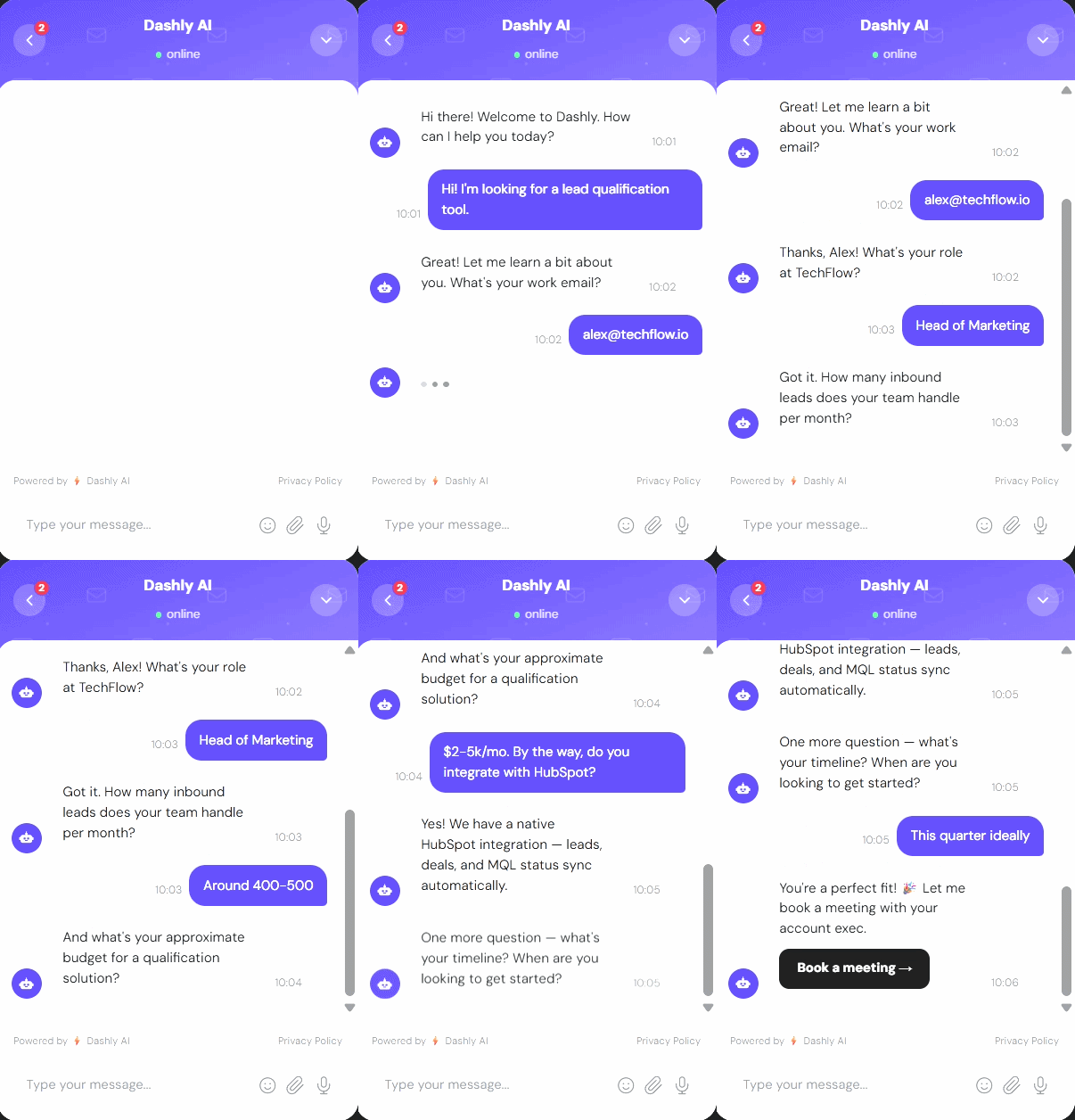
Dashly’s AI Qualifier agent addresses the speed-to-lead problem directly. It responds to every new inbound lead immediately, regardless of time zone or hour, qualifies them using behavioral signals and conversation answers, and books a meeting with a human rep. No waiting. No dropped leads from slow follow-up.
Key metrics: lead-to-customer rate, speed-to-lead, demo-to-close ratio, deal velocity (days from first touch to signed contract).
Stage 4 — Delight (Post-Purchase)
Goal: turn customers into promoters.
The funnel doesn’t end at the sale. Delighted customers renew, expand, refer colleagues, and post G2 reviews that your next wave of TOFU visitors will read before they ever find your content. This is what makes the flywheel spin.
Post-purchase inbound tools:
- Onboarding sequences tied to activation milestones, not just calendar time
- NPS surveys at 30 and 90 days post-purchase — early warning signals for churn and expansion
- Customer success check-ins at key usage milestones
- Community access, events, and peer learning programs
A 5-percentage-point improvement in monthly retention compounds dramatically over 12 months. Teams that treat Delight as a real funnel stage — with dedicated content, tooling, and metrics — consistently show lower churn and higher expansion MRR than those who hand customers off to a generic onboarding email and disappear.
Key metrics: NPS score, monthly churn rate, expansion MRR, customer lifetime value (CLV), referral volume.
Inbound vs outbound marketing funnel: Key differences
| Inbound | Outbound | |
|---|---|---|
| Traffic source | Earned — organic search, referral, social shares | Paid or interrupt-based — cold email, display ads, cold calls |
| Upfront investment | High time/effort cost; low per-lead cost at scale | Lower initial setup; higher recurring cost per lead |
| Scalability | Compounds over time — old content keeps generating leads | Linear with spend — stop paying, stop getting leads |
| Time to results | 3–9 months for SEO and content to generate consistent pipeline | Faster to first lead, but stops when budget or attention stops |
| Trust level | Higher — prospect finds you on their own timeline | Lower — you interrupt them on your timeline |
| Best fit | Complex, high-consideration B2B purchases with longer sales cycles | High-velocity transactional sales or a very narrow, well-defined ICP |
When to lean on inbound: You’re selling to buyers who research before purchasing (standard in B2B SaaS). Your sales cycle is longer than a few weeks. You want compounding returns on content investment that pay off over years, not just quarters.
When outbound makes more sense: You need pipeline within weeks, not months. Your ICP is narrow enough to target with a precise list. You’re launching into a market that doesn’t yet know the problem exists — outbound can create demand faster than waiting for inbound intent signals to appear.
Most B2B SaaS teams at the growth stage use both. Inbound handles the scalable, compounding side of demand generation. Outbound pursues specific accounts and fills pipeline gaps. The inbound marketing sales funnel is the engine; outbound is the sprint lever.
Content strategy for each funnel stage
The same content doesn’t work across all stages. A first-time visitor who just discovered they have a problem needs different information than someone who’s compared your pricing to three competitors and is deciding this week. Running one content strategy across the entire funnel is one of the most common reasons inbound programs underperform.
Top-of-funnel content (TOFU)
The goal here is awareness, not conversion. Don’t put a “Book a demo” button in a post targeting someone who just learned they have the problem you solve. The CTA isn’t wrong — it’s the wrong CTA for this person at this moment.
Strong TOFU content formats for inbound marketing lead generation:
- SEO blog posts targeting searches your ICP makes during problem discovery — “how to improve lead response time,” “what is a good visitor-to-lead conversion rate,” “top of funnel marketing strategies that actually compound”
- Short-form video — LinkedIn native video explaining a framework in 60–90 seconds performs particularly well for B2B audiences
- Infographics and data visualizations — shareable, link-worthy, useful for building domain authority
- Listicles and comparison articles — “10 best live chat tools for SaaS” captures buyers beginning to evaluate options
- Podcast appearances — positions founders and subject-matter experts in front of audiences who already trust the host
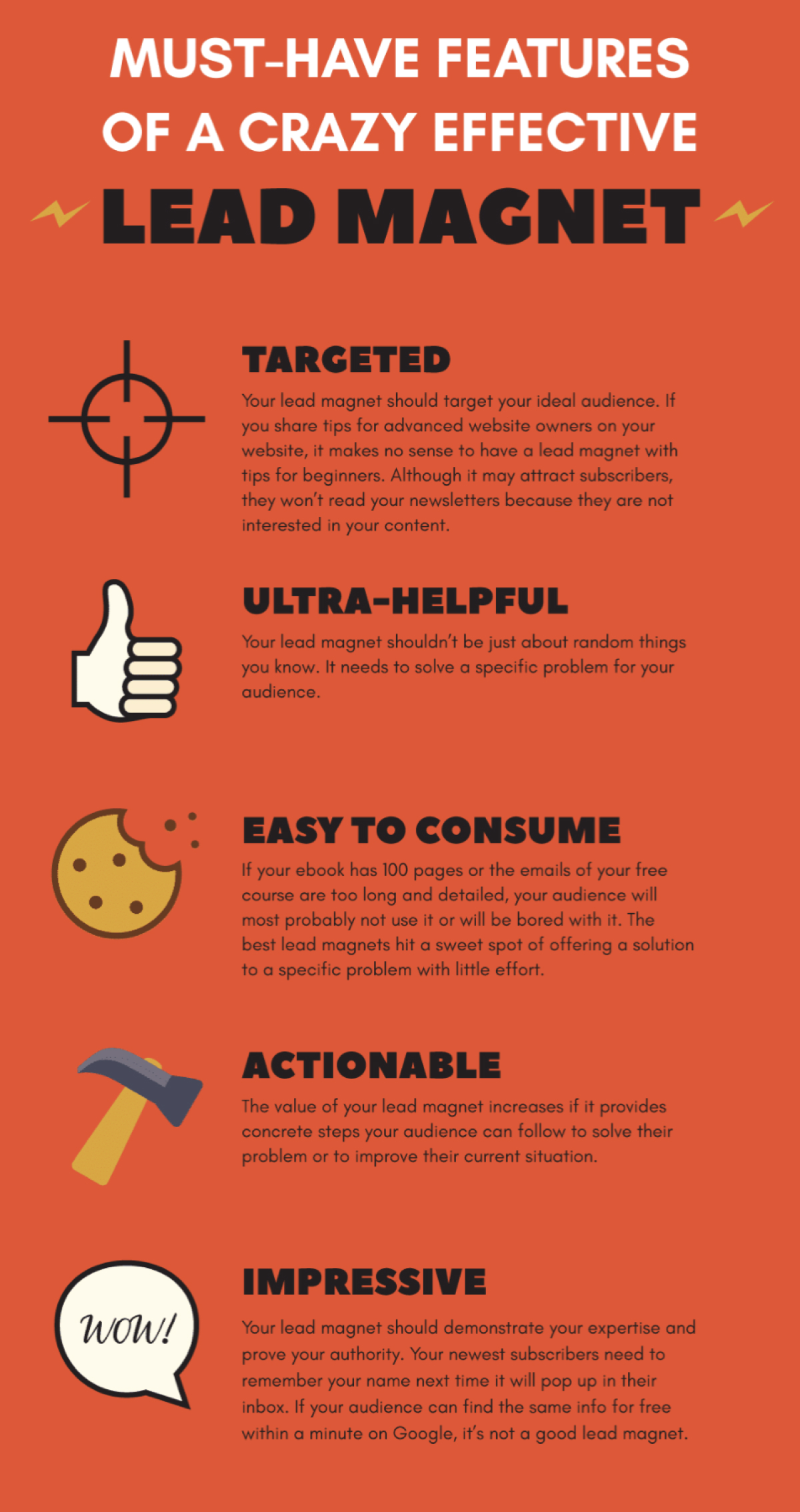
- Lead magnets — actionable useful pieces of content that could be exchanged for lead’s contact.
Here are a few tips for making an effective lead magnet:
The unifying principle: answer questions your ICP is already typing into Google. Be the most helpful resource on the topic. The content marketing funnel only works when TOFU content earns trust rather than burning it with premature selling.
Middle-of-funnel content (MOFU)
The prospect knows the problem. They’re evaluating solutions. This is where you shift from “here’s useful information” to “here’s why our approach is the right one.”
Effective MOFU content types:
- Case studies with specific numbers — not “Company X improved efficiency” but “Company X reduced lead response time from 4 hours to 8 minutes and saw a 31% lift in demo conversion.” Names, numbers, before/after.
- Email nurture sequences — behavior-triggered performs better than time-based. A lead who visits your pricing page twice in one week gets a different sequence than someone who downloaded a guide six weeks ago.
- Webinars — deep-dive on a problem your ICP has, with your product as one part of the solution (not the whole show)
- Comparison guides — “Dashly vs. Intercom: how to decide which fits your team” captures high-intent MOFU searches
- ROI calculators — self-serve tools that help the prospect build an internal business case without a sales call
The email marketing funnel is central at MOFU. A structured sequence of 6–8 emails after a lead magnet download can convert 10–15% of new subscribers into demo requests, without any additional human outreach. The key is behavioral triggers and segmentation by company type, not a fixed send schedule that treats everyone the same.
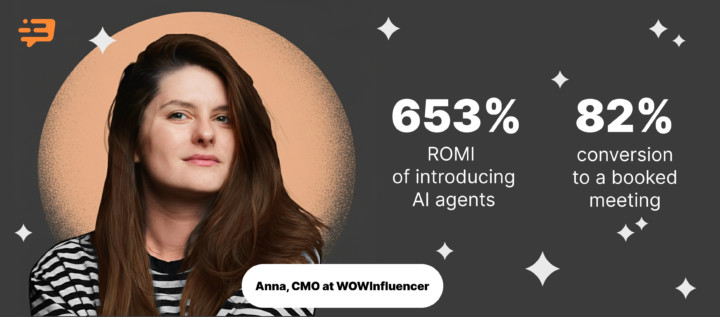
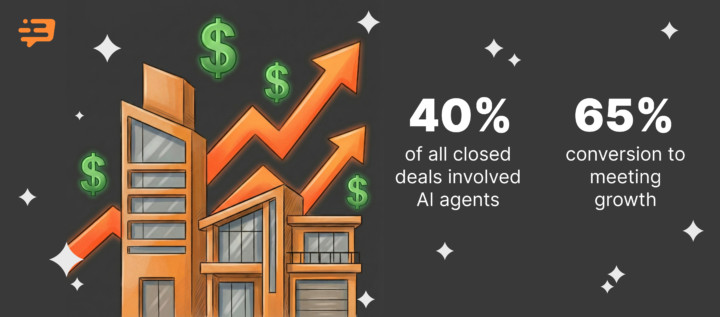
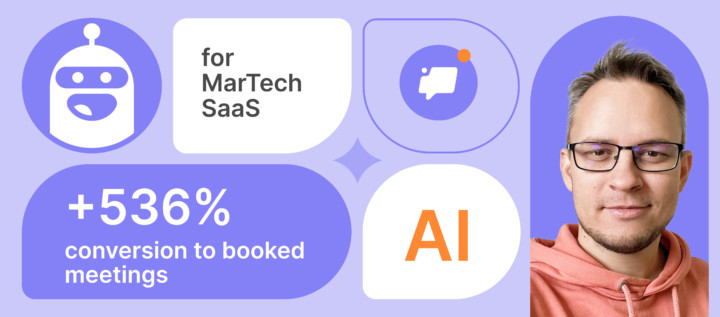
By the way, you can check out impressive results our customers achieve in our case studies 😉
Bottom-of-funnel content (BOFU)
At BOFU, the prospect is deciding. Your job is to make the decision easy and reduce the perceived risk of choosing you.
What works at the bottom of the inbound sales funnel:
- Self-serve demo booking with clear agenda options and instant confirmation
- Free trial with guided activation and milestone-based check-ins
- Pricing page with FAQ that preemptively handles the most common objections
- Customer testimonials from companies similar to the prospect (same size, same industry, same pain)
- ROI case studies — the more specific, the more persuasive
Live chat and AI chatbots belong at BOFU too. When someone’s on your pricing page at 11pm, they’re not looking for a blog post. They want to ask one specific question and get a real answer. An AI agent that responds in seconds, qualifies intent, and books a demo slot on the spot converts that prospect, instead of routing them to a “we’ll be in touch” form they’ll forget by morning.
How to Build an Inbound Marketing Funnel: Step-by-Step
Here’s the practical build sequence. Each step matters, and skipping steps creates specific, predictable leaks.
Step 1 — Define your ICP
Without a clear Ideal Customer Profile, the funnel attracts traffic that never converts. You’ll rank for keywords your best customers don’t search. You’ll capture leads your sales team can’t close. You’ll run nurture sequences that resonate with exactly the wrong people.
A working ICP definition covers:
- Company profile — size (employees and revenue range), industry, sub-vertical, tech stack
- Buyer profile — job title, decision-making authority, typical buying committee composition
- Pain points — specific problems in their current workflow, not generic pain categories like “efficiency”
- Trigger events — what makes them start looking for a solution right now? New funding, team expansion, failed implementation, competitive pressure
- Success metrics — how do they measure whether your solution actually worked?
One nuance specific to the B2B inbound marketing funnel: the economic buyer and the end user are often different people. The CMO signs the contract. The marketing manager uses the tool daily. Your content strategy probably needs to address both: different formats, different pain points, different proof. The b2b marketing funnel typically requires content at multiple levels of the buying committee.
Step 2 — Map content to the buyer journey
Once you know who you’re targeting, map content to each funnel stage. A content matrix prevents the most common mistake: over-producing TOFU and neglecting BOFU.
| Stage | Format | Channel | Goal |
|---|---|---|---|
| TOFU | SEO blog posts, short video, infographics | Google, LinkedIn, YouTube | Awareness — make them aware of the problem and your approach |
| MOFU | Email sequences, webinars, case studies, comparison guides | Email, retargeting ads, organic social | Trust — help them evaluate and build internal consensus |
| BOFU | Demo, free trial, pricing page, ROI calculator | Website, direct sales outreach | Decision — reduce risk, make the choice clear |
| Delight | Onboarding sequences, NPS surveys, expansion offers | Email, in-product, customer success | Retention — activate, expand, generate referrals |
Don’t start producing content at volume until this matrix exists. The teams that struggle with inbound ROI almost always have the same problem: 90% of their content is TOFU (it’s more interesting to write) and almost nothing at BOFU (harder to build, less creative). The money is at the bottom.
Step 3 — Set up lead capture and qualification
Traffic without capture is pageviews, not pipeline. You need mechanisms to turn anonymous visitors into identifiable leads with enough data to determine fit.
Lead capture tools:
- Forms on high-intent pages — pricing, case studies, demo request pages
- Chatbot or live chat on key landing pages — captures intent in real time
- Exit-intent pop-ups with a specific, relevant offer (not a generic “subscribe to our newsletter”)
- Gated content — guides, calculators, templates that solve a specific problem in exchange for an email
Capture is step one. Inbound lead qualification is step two. Yet most teams skip it. Not every lead who fills out a form matches your ICP. Without qualification, sales spends 40% of its time on calls that go nowhere.
Lead scoring assigns points based on company size, job title, page views, content consumed, and email engagement. Leads above a threshold route to sales. Leads below continue nurturing. The MQL definition (what score qualifies as Marketing Qualified) should be set jointly with sales, not determined by marketing alone.
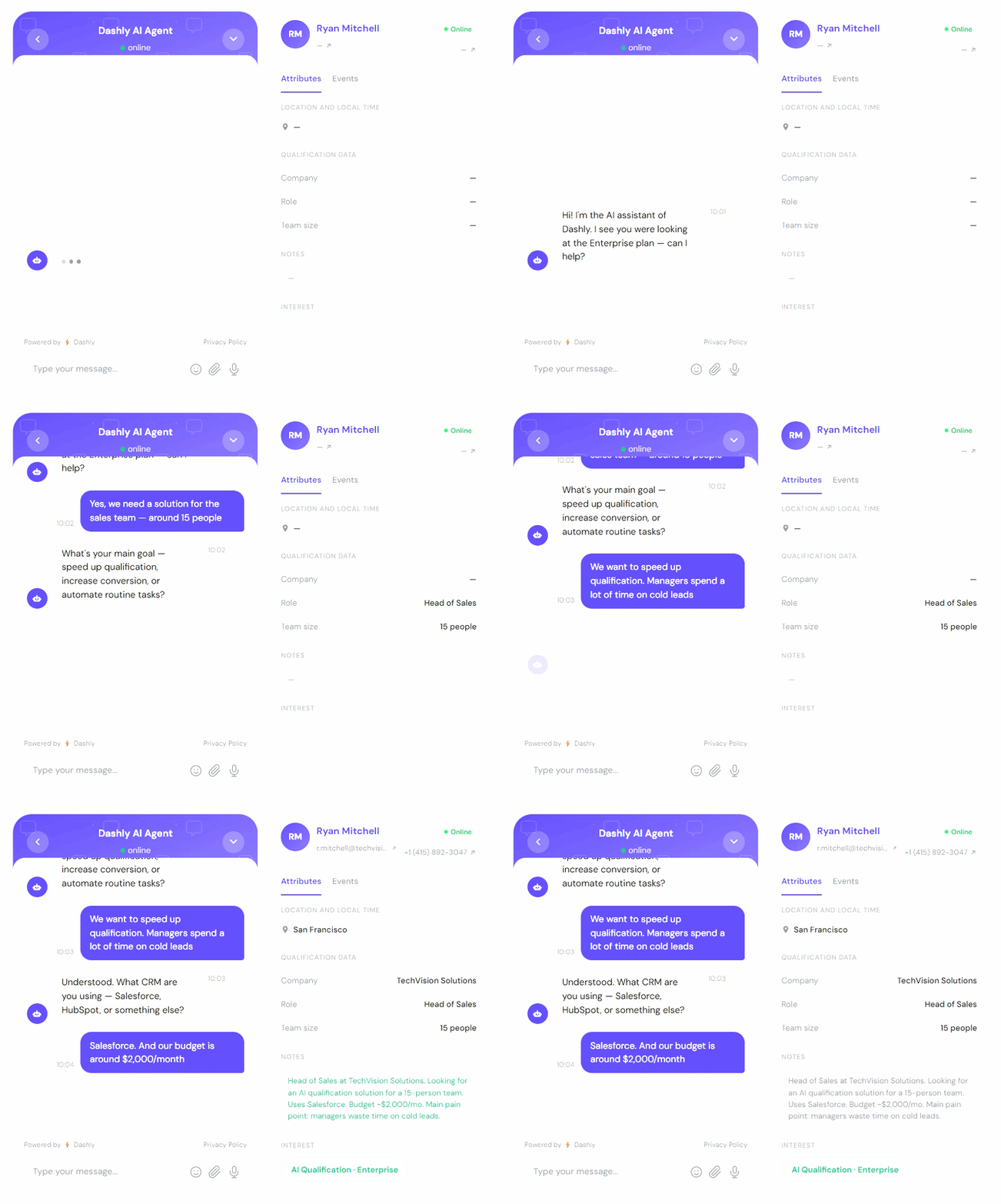
Dashly’s AI Qualifier agent handles the qualification conversation automatically. It runs through qualification logic in the chat window — company size, use case, timeline, budget authority — and scores the lead based on answers before routing them. High-fit leads get a meeting booked immediately. Lower-fit leads enter a nurture sequence. All of this happens in real time, without human involvement at each step.
Step 4 — Build nurture sequences
Most leads aren’t ready to buy when they first convert. They have the problem, they’re evaluating solutions, but they’re not at the decision stage yet. Nurture sequences provide information, build trust, and keep your brand present until they’re ready.
A basic MOFU email sequence structure that works:
- Welcome — confirm what they downloaded, set expectations, one low-friction CTA
- Problem validation — describe their pain in their language. No product mention. Shows you understand them.
- Case study — a customer who had the same problem and fixed it, with the specific metric and timeline
- Product angle — introduce your solution, tied directly to the problem from email 2
- Social proof — more evidence, different format: a video testimonial, a G2 review excerpt, a data point
- Soft CTA — “Would a 20-minute call be worth it?”
- Final nudge — “Still working through [problem]? Here’s the one thing most teams miss when they try to solve it.”
Behavioral triggers make sequences more effective than time-based sends. If a lead visits your pricing page after email 3, skip to email 6. If they watch a full webinar recording, move them to BOFU and route to sales. If they haven’t opened any email in 21 days, trigger a re-engagement sequence before moving them to a lower-cadence list.
Hyper-personalization by segment (industry, company size, job title) consistently improves conversion rates over generic sequences. A demand generation manager at a 200-person SaaS company has different priorities than a VP of Sales at a 2,000-person enterprise. The sequence should reflect that difference.
Step 5 — Align sales and marketing
This is where inbound funnels fail most often. Not because of bad content or wrong tools, but because of the gap between marketing and sales teams.
Marketing generates MQLs. Sales ignores half of them because they don’t match what they consider a “real lead.” Marketing says sales doesn’t follow up fast enough. Sales says marketing sends them unqualified contacts. Both are partly right.
The fix requires alignment on two things:
A shared MQL/SQL definition, written down. Both teams agree on what makes a lead marketing-qualified vs. sales-qualified. What firmographic signals? What behavioral signals? What disqualifies a lead outright? Write it down. Review it every quarter based on what’s actually closing.
An SLA on response time. Marketing commits to lead volume and quality targets. Sales commits to responding to high-intent MQLs within a specific window: under 5 minutes for demo requests, under 4 hours for lower-intent leads. Both teams get measured on these numbers, visible to both in the same dashboard.
A shared weekly review (one that both marketing and sales attend, looking at the same numbers) eliminates most of the friction. When marketing can see demo conversion rates and sales can see MQL quality scores, the conversation shifts from blame to optimization. Track MQL-to-SQL conversion rate as a leading indicator: below 20% means MQL criteria are too broad; above 60% often means you’re being too restrictive and leaving good leads in nurture too long.
Step 6 — Measure, test, optimize
Analyze the funnel from the bottom up, not the top down. Start with “why aren’t leads closing?” before “why aren’t we getting more traffic?” Adding traffic to a leaky funnel doesn’t fix anything. It makes the leak bigger.
Weekly review checklist:
- Lead-to-customer conversion rate, by source and by SDR
- Demo-to-close ratio and average deal velocity
- Speed-to-lead by hour of day — this surfaces coverage gaps fast
- Visitor-to-lead conversion rate by landing page
- MQL-to-SQL conversion rate and the most common disqualification reasons
A/B test one variable at a time. CTA copy. Form length. Email subject lines. Chat trigger timing. Pop-up offer. Landing page headline. Small improvements at the bottom of the funnel compound quickly when applied across volume. A 2-percentage-point improvement in demo-to-close is often worth more than doubling top-of-funnel traffic.
Marketing funnel optimization works best when you identify the single largest drop-off point, fix it, measure the result, and then move up the funnel to the next leak. Most teams try to optimize everything at once and end up with unclear causality. Find the biggest hole. Fix it. Move on.
Key metrics for each funnel stage
| Stage | Metrics | Benchmark |
|---|---|---|
| Attract | Organic traffic, CTR from search, branded vs. non-branded search ratio, pages per session | Varies by domain authority and category maturity |
| Engage | Visitor-to-lead rate, MQL volume, cost per lead, email open and click rates | 2–5% visitor-to-lead for B2B SaaS |
| Convert | Lead-to-customer rate, speed-to-lead, demo-to-close ratio, deal velocity | Respond in under 5 min for ~9x conversion lift |
| Delight | NPS score at 30 and 90 days, monthly churn rate, expansion MRR, CLV | Monthly churn under 2% for healthy SaaS |
On visitor-to-lead rate: 2–5% is the typical range for B2B SaaS with targeted traffic. Below 1% almost always signals a mismatch between the content bringing visitors in and the offer on the page. Above 5% is possible with strong product-market fit, but can also indicate lead capture that’s too broad: lots of contacts with no real fit.
On speed-to-lead: The biggest lever most B2B SaaS teams aren’t pulling. The window between a lead submitting a form and receiving a meaningful, personalized response is where most inbound pipeline evaporates. An AI agent closes this gap completely, responding in seconds rather than hours. The revenue impact is not marginal.
On NPS as a leading indicator: NPS at 30 days post-purchase predicts 90-day churn more reliably than most teams expect. A 30-day NPS below 30 is a churn warning. A 30-day NPS above 60 is an expansion and referral signal. Both are actionable if you catch them early enough. Most teams measure NPS annually. Shift to 30-day measurement and you have real runway to intervene.
How AI is transforming the inbound marketing funnel in 2026
The inbound marketing automation story has changed significantly in the past two years. It used to mean “email sequences and marketing automation platforms.” In 2026, it means AI agents that operate independently across every stage of the funnel, without waiting for a human at each handoff.
AI at TOFU: Content generation at scale with quality guardrails that didn’t exist two years ago. SEO keyword research and content cluster mapping in minutes instead of days. Automated A/B testing of headlines, meta descriptions, and CTAs. Teams now produce and optimize significantly more content volume with the same headcount.
AI at MOFU: Predictive lead scoring based on behavioral signals, not just firmographic data. Hyper-personalization of email sequences — different copy, different case studies, different CTAs based on industry, company size, and behavioral history. AI-driven recommendations for what content to send next, based on what each lead has already consumed.
AI at BOFU — where the impact is most concrete.
The classic BOFU problem: a qualified lead submits a demo request at 9pm on a Tuesday. They receive an automated “we’ll be in touch” confirmation. They hear back Wednesday morning. 12 hours later. By then, they’ve already had a call with a competitor, started a trial with another, and mentally moved on.
AI agents solve this. A Qualifier agent responds in seconds, 24/7, regardless of time zone. It opens a conversation, asks qualification questions naturally, scores the lead against ICP criteria, and books a meeting with a specific human rep. All within the same chat session. The lead goes from “just submitted a form” to “meeting confirmed” in under 3 minutes.
Dashly’s multi-agent approach covers the full funnel. The Insight Agent captures behavioral data as a prospect moves through the site. The Engagement Agent handles initial chat and qualification. The Nurturing Agent runs follow-up sequences for leads who aren’t ready yet. The Booking Agent handles meeting scheduling and pre-meeting reminders that reduce no-shows by 30–90%. Each agent has a specific role. Together, they operate as a 24/7 inbound revenue team that doesn’t have sick days or time zones.
Companies using Dashly’s AI agents see an average 52% increase in qualified meetings booked within the first 60 days of deployment.
The bigger structural shift: AI agents don’t just make the existing funnel faster. They close the gaps between stages where leads used to fall through. The inbound marketing funnel used to have seams — moments where a lead landed and nothing happened because it was 8pm or the relevant person was in a meeting. AI makes the funnel continuous.
Common inbound funnel mistakes (and how to fix them)
Mistake 1: Everything goes to TOFU, BOFU gets neglected
Symptom: Lots of traffic, not enough pipeline.
Why it happens: TOFU content is easier to produce and gets more social engagement. BOFU content (demos, pricing pages, ROI calculators) is harder to build and less fun to create.
Fix: Audit your content library. If less than 20% is BOFU-stage, shift some production budget toward conversion content. A single well-optimized pricing page FAQ can convert more leads than 10 awareness blog posts.
Mistake 2: No lead scoring
Symptom: Sales spends time on leads that go nowhere. “The leads from marketing are terrible.”
Why it happens: Every form fill gets counted as a lead regardless of company size, job title, or intent signal.
Fix: Implement basic lead scoring with a handful of criteria: company size match (points), job title match to ICP (points), pricing page visit (points), demo page view (points), student or competitor email domain (disqualify). Route only above-threshold leads to sales. Everything else goes to nurture.
Mistake 3: Slow response to high-intent leads
Symptom: Demo requests come in, but show-up rates are low and deals stall early.
Why it happens: Manual processes, business hours limitations, queue-based follow-up that treats an 11pm form submission the same as a 10am one.
Fix: Automate immediate response for all inbound demo requests. AI-powered qualification and booking is the highest-leverage fix. The target is a qualified, personalized response within 5 minutes — not a generic “we’ll be in touch” autoresponder that lands in a pile of emails the prospect won’t open tomorrow.
Mistake 4: Sales and marketing use different definitions of “qualified”
Symptom: Marketing hits MQL targets. Sales complains about lead quality. MQL-to-SQL conversion is below 15%.
Why it happens: The MQL definition was set by marketing alone and hasn’t been updated since the product or ICP changed.
Fix: Run a joint session to define MQL and SQL explicitly, based on recent closed-won deals. Which signals predicted a closed deal? Use those as your criteria. Update quarterly. Track MQL-to-SQL conversion rate as a shared metric that both teams own.
Mistake 5: Same CTA at every funnel stage
Symptom: “Book a demo” CTAs appear on every page, including first-touch TOFU content. Conversion rates are disappointing across the board.
Why it happens: “We want more demos” becomes the default CTA regardless of where the visitor is in their decision process.
Fix: Match the ask to the intent signal. TOFU: download a guide or watch a short video. MOFU: register for a webinar or read a case study. BOFU: book a demo or start a trial. Each CTA should feel like a natural next step.
Mistake 6: Metrics reviewed monthly instead of weekly
Symptom: Problems compound for 30 days before anyone notices. A funnel that stopped converting two weeks ago has already lost 10+ deals before the monthly review catches it.
Why it happens: Reporting cadence was built for executive dashboards, not operational monitoring.
Fix: Weekly funnel reviews on core operational metrics: visitor-to-lead, MQL volume, speed-to-lead, demo-to-close. Set automated alerts when conversion rates drop more than 15% week-over-week. Fix problems when they’re small.
Inbound marketing funnel FAQ
An inbound marketing funnel is a model that maps how unknown visitors become customers through content, engagement, and trust-building. Without relying on interruption tactics like cold calls or unsolicited email. It attracts people through SEO and content marketing, captures their contact information through lead magnets and chat, and converts them through demos, trials, and sales conversations.
The four stages are: Attract (turning strangers into visitors through SEO, content, and social media), Engage (turning visitors into leads through chat, forms, and lead magnets), Convert (turning leads into customers through demos, trials, and sales conversations), and Delight (turning customers into promoters through onboarding, customer success, and ongoing engagement that reduces churn and drives referrals).
The inbound marketing funnel covers the full journey from stranger to customer: marketing owns the Attract and Engage stages. The sales funnel covers the narrower process of moving a qualified lead through evaluation to close. The handoff between the two happens at MQL-to-SQL conversion, where marketing passes a qualified lead to the sales team for active pursuit.
TOFU works best with SEO blog posts, short-form video, and infographics targeting problem-aware searches. MOFU converts with email sequences, case studies, webinars, and comparison guides that build trust. BOFU closes with demos, free trials, pricing pages, ROI calculators, and customer testimonials that reduce decision risk and make the choice feel obvious.
First leads from content typically appear within 3–6 months as SEO rankings build. Consistent, predictable pipeline from inbound usually takes 9–12 months. The compounding effect (where older content continues generating leads without additional investment) builds over 12–24 months. Slow start, accelerating return over time.
AI agents operate across all four stages. At TOFU, they assist with content creation and SEO research at scale. At MOFU, they personalize email sequences and score leads based on behavioral signals. At BOFU, they handle immediate qualification and meeting booking, eliminating the speed-to-lead problem that kills most inbound pipeline. At Delight, they automate onboarding check-ins and NPS follow-up. The highest-impact application in 2026 is BOFU qualification: an AI agent that responds to every inbound lead within seconds, 24/7, qualifies them, books the meeting, and hands off to a human rep with full context.




![What is growth hacking and how it works [explained by experts]](https://www.dashly.io/blog/wp-content/uploads/2023/04/What-is-growth-hacking-and-how-it-works-explained-by-experts-720x317.png)
![What is inbound sales? The complete B2B guide [2026]](https://www.dashly.io/blog/wp-content/uploads/2025/03/7-caring-inbound-sales-strategies-to-elevate-your-revenue-in-2025-6-1-720x405.jpg)